


Leave Your Message

Which Are the Top Water Recycling Companies in China?

China’s water recycling market is shaped by urban growth, industrial demand, and tighter pressure on freshwater supplies. Reclaimed water can support factory processes, power-plant cooling, street cleaning, and park irrigation. The work is practical and local. A treatment plant near a textile zone may face very different needs from one serving a northern city.

So, which companies deserve attention? This guide examines established operators and technology providers, including Beijing Enterprises Water Group, China Everbright Environment, China Water Affairs Group, and OriginWater. They differ in scale, business focus, and technical strengths. Some operate municipal wastewater systems; others offer membrane technologies, engineering services, or broader environmental infrastructure. “Top” is not a fixed ranking. Project results depend on water quality, operating costs, local partnerships, and the reliability of treated-water delivery.

The Water Recycling Industry is also difficult to assess from company size alone. A large portfolio does not automatically mean strong performance at every site. Useful checks include treatment capacity, reuse rates, operating history, disclosed project data, and the types of customers served. Look for clear evidence, not only ambitious targets. Details matter: membrane performance, energy use, and the distance recycled water must travel can change a project’s economics. Public information may be incomplete, and company reports do not always allow direct comparisons. That deserves caution. This overview offers a starting point, not a final verdict.
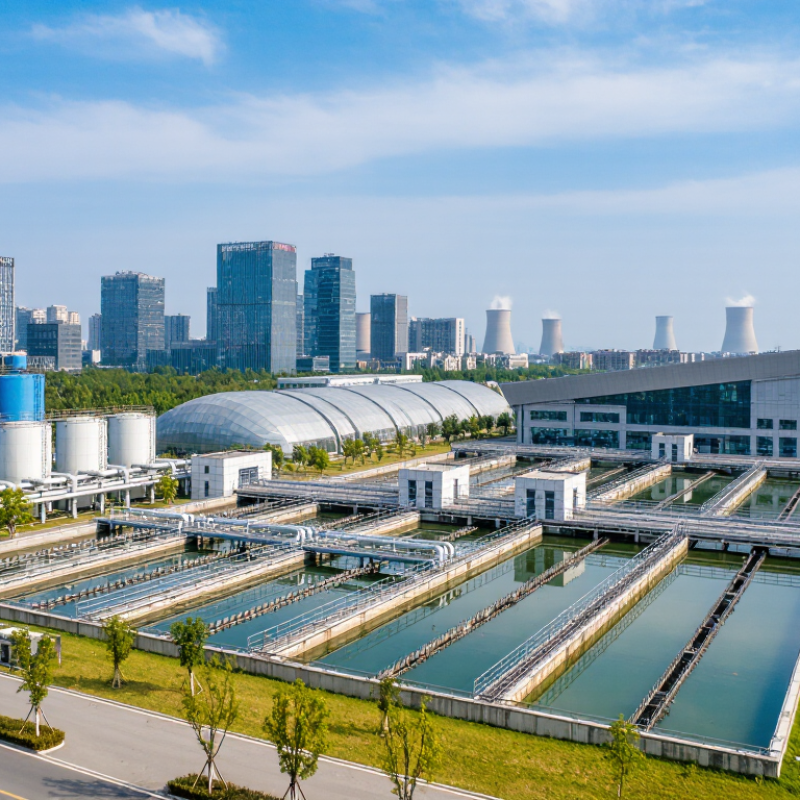
Which Are the Top Water Recycling Companies in China?

How Water Recycling Is Defined and Evaluated in China

In China, water recycling generally means treating municipal wastewater or industrial effluent so it can be safely reused for a defined purpose. It does not mean every treated drop is suitable for every use. Quality requirements differ for landscape irrigation, road cleaning, industrial cooling, and other applications. China’s GB/T 18920-2020 standard sets quality requirements for reclaimed water used in urban miscellaneous applications. The intended use matters.

A useful policy reference is the National Development and Reform Commission’s 2021 Action Plan for Promoting the Utilization of Sewage Resources. It set a 2025 target of at least 25% reclaimed-water use in water-scarce prefecture-level cities and above, and 35% in the Beijing-Tianjin-Hebei region. These are targets, not proof of actual performance. That distinction matters. Evaluation should also examine stable output, compliance with the relevant water-quality standard, and whether nearby users can take the water consistently. A plant may report high treatment capacity, yet still recycle little water if pipelines are missing or demand varies by season. Energy use and sludge handling deserve attention too; headline reuse figures alone leave gaps.
Leading Water Recycling Companies and Their Main Services

China’s leading water-recycling providers are best compared by what they deliver, not by plant capacity alone. Municipal specialists upgrade sewage works with membrane bioreactors, filtration, disinfection, and reuse pipelines. Their treated water can serve parks, street cleaning, cooling towers, and industrial processes. China’s 2021 14th Five-Year Plan for Urban Wastewater Treatment and Resource Utilization set a 2025 reclaimed-water use target above 25% for water-scarce cities. For the Beijing-Tianjin-Hebei region, the target was above 35%. These are policy targets, not verified outcomes. That distinction matters.

Industrial water firms handle a different problem. They treat complex streams from sectors such as chemicals, textiles, and electronics, then recover water for cooling or production. Services may include membrane concentration, high-salinity treatment, process audits, and ongoing monitoring. Some firms also build decentralized systems for campuses and new districts, where sewer connections are limited. Look for demonstrated effluent quality, stable operation, and transparent energy and sludge figures. Small details count. A clear sampling point beside a plant outlet says more than a polished rendering. Still, published case studies rarely disclose comparable lifecycle costs, making rankings uncertain. Procurement teams should check independent testing and performance across several seasons, rather than relying on headline reuse rates.

China’s Urban Water-Reuse Policy Targets

Targets for reclaimed-water use highlight the growing need for wastewater treatment, advanced purification, and water-reuse infrastructure.

The figures show 2025 policy targets, not measured outcomes or company performance. Source: China National Development and Reform Commission, Guiding Opinions on Promoting the Utilization of Sewage Resources (2021). The policy specifies targets of over 35% for Beijing–Tianjin–Hebei, over 30% for medium and large cities in the Yellow River Basin, and over 25% for water-scarce cities nationwide.

Technologies Used in China’s Water Reuse Projects

China’s water reuse projects often combine biological treatment with membrane filtration. In municipal plants, membrane bioreactors use microorganisms to reduce organic pollutants while membranes retain fine particles. The resulting water can serve industrial cooling, landscaping, or street cleaning, depending on local standards and treatment design. It looks clear, but clarity alone does not prove safety.

For higher-quality reuse, ultrafiltration may be followed by reverse osmosis. This pairing can reduce suspended solids and dissolved salts, making it useful for some industrial processes. Yet reverse osmosis creates a concentrated residual stream that needs careful management. That matters. Ultraviolet disinfection, chlorine, or advanced oxidation may provide additional barriers, especially when water quality varies. Operators monitor indicators such as turbidity, pressure, and microbial levels; alarms can signal a filter problem before it affects supply. In coastal or water-stressed regions, reclaimed water may also reduce demand on freshwater sources.

Technology choices depend on the intended use, incoming wastewater, energy costs, and maintenance capacity. A plant designed for landscape irrigation may not need the same treatment train as one supplying a factory boiler. Still, trade-offs remain. Membranes foul, sensors need calibration, and long-term performance can differ from design expectations. One weak point is easy to overlook: skilled operation is as important as installing advanced equipment.

Which Are the Top Water Recycling Companies in China? - Technologies Used in China’s Water Reuse Projects

Technology or Process Role in the Treatment Train Typical Reuse Applications Key Considerations
Activated-sludge biological treatment Uses microorganisms to reduce biodegradable organic matter and, in suitable configurations, remove nitrogen and phosphorus from municipal wastewater. Baseline treatment before further polishing for urban non-potable reuse, industrial supply, or environmental replenishment. Usually paired with filtration and disinfection when reclaimed water must meet reuse quality requirements.
Membrane bioreactor (MBR) Combines biological treatment with membrane separation to retain suspended solids and produce a relatively clear effluent. Space-constrained municipal plants and projects requiring consistent treated water for landscaping, cleaning, or additional advanced treatment. Membrane fouling, cleaning, energy use, and management of residual sludge need to be considered. Dissolved salts may require separate treatment.
Sand or media filtration Removes remaining suspended particles after biological treatment and helps prepare water for disinfection or membrane processes. Urban landscaping, road washing, and other non-potable uses when combined with treatment appropriate to the intended water-quality standard. Filter backwashing creates a residual stream that must be managed; performance depends on upstream treatment and operating conditions.
Ultrafiltration (UF) Membrane filtration removes fine suspended solids and many microorganisms, commonly serving as pretreatment for reverse osmosis. Industrial reuse and advanced treatment trains where a low-turbidity feed is needed. UF does not remove most dissolved salts; pretreatment and membrane cleaning are important for reliable operation.
Reverse osmosis (RO) Separates a large share of dissolved salts and other dissolved constituents from water using a semipermeable membrane. Higher-quality industrial process water and other applications that require lower salinity than conventional reclaimed water provides. Requires energy and suitable pretreatment. The concentrated reject stream needs a site-specific management or disposal plan.
Ozonation and biological activated carbon (BAC) Ozone oxidizes some organic compounds, while BAC can support adsorption and biological removal of certain residual substances. Advanced polishing where improved control of taste, odor, color, or selected organic contaminants is required. Design and operation should reflect the source-water characteristics and the target reuse requirements; this process is not a substitute for salinity removal.
Ultraviolet (UV) disinfection Inactivates microorganisms by exposing treated water to ultraviolet light. Disinfection of reclaimed water for applications such as landscape irrigation and urban environmental uses. Effective UV treatment depends on water clarity and equipment operation. A residual disinfectant may be needed where water is stored or distributed.
Chlorination Disinfects treated water and can provide a residual that helps control microbial regrowth in storage and distribution systems. Reclaimed-water distribution networks and uses where maintaining a disinfectant residual is part of the system design. Dose and contact time require control; water quality and the intended use determine whether chlorination is appropriate.
Constructed wetlands and ecological polishing Uses wetland vegetation, media, and microbial processes to provide additional treatment and ecological polishing. Suitable sites for polishing treated effluent and supporting landscape or ecological water-replenishment projects. Requires land and ongoing management. Treatment performance varies with climate, loading, and seasonal conditions.

Note: These are established technology categories used in water reclamation. Actual treatment trains and reuse suitability depend on influent quality, local standards, intended end use, site conditions, and management of residuals.

Industries and Regions Served by Leading Providers

Water recycling providers in China serve municipal utilities, industrial parks, and factories that need a dependable supply of process water. Their projects may include wastewater treatment, membrane filtration, and systems that return treated water to cooling towers or cleaning lines. The right design depends on incoming water quality and the intended reuse. Details matter.

Industries served include electronics, textiles, chemicals, food processing, and power generation. A textile plant may need consistent water for dyeing, while a food facility often prioritizes stable treatment and careful monitoring. Mining and energy operations may also reuse water where freshwater is limited. Not every process can use recycled water without additional treatment.

Regional needs differ. Northern provinces face tighter water supplies, making industrial reuse especially valuable. Coastal and eastern manufacturing hubs often need systems suited to dense industrial parks and variable wastewater streams. In western areas, mining, energy, and long-distance infrastructure can shape project choices. These are broad patterns, not a map of every provider’s reach. Service quality depends on local engineering teams, maintenance access, and clear performance records. A plant’s stated reuse rate can also hide seasonal variation, so operators should review operating data, not just design targets.

How to Compare Companies for a Water Recycling Project

A water-recycling company should be compared against the project’s actual feedwater, reuse target, and operating conditions—not a generic “best technology” claim. UNESCO’s 2017 World Water Development Report estimated that over 80% of global wastewater was discharged without adequate treatment. That figure underscores why removal performance and reliable monitoring matter. Ask bidders for independently verified results on water quality, energy use, chemical consumption, and sludge production. Numbers matter. Check whether test data cover seasonal changes, such as colder influent or sudden increases in suspended solids. A polished pilot is not proof; I would want to see performance sustained beyond ideal conditions.

For projects in China, compare each proposal with local reuse requirements and the 2021 national urban wastewater plan. It set a 2025 target of at least 25% reclaimed-water use in water-scarce cities at prefecture level and above, with 35% for the Beijing-Tianjin-Hebei region. Compare whole-life cost, not just construction price: include membrane replacement, skilled staffing, maintenance access, and downtime. Request references from facilities with similar capacity and influent, then speak with their operators. Test it onsite. Also review the proposed pilot’s sampling plan and acceptance criteria before signing. One caveat: a low-cost design may still win on paper, while leaving the owner with difficult daily operation.