Top 10 Solid Waste Treatment Companies in China for Global Buyers?
The Solid Waste Treatment Industry in China has seen significant growth in recent years. According to a report by Statista, the market size reached approximately USD 45 billion in 2022. This reflects the increasing focus on environmental protection and sustainable practices. Companies in this sector are essential for managing the growing volumes of waste generated by urbanization and industrialization.
China faces multiple challenges in solid waste management. While the government promotes advanced technologies, many facilities still rely on traditional methods. The gap between innovation and application raises questions about efficiency and effectiveness. This scenario emphasizes the need for global buyers to partner with top-tier companies that are both reliable and compliant with international standards.
As we explore the top ten solid waste treatment companies in China, it's vital to consider their expertise and track record. Their contributions vary greatly, with some excelling in waste-to-energy processes while others focus on recycling and composting solutions. Understanding their capabilities can help buyers make informed decisions in this evolving industry.
Overview of Solid Waste Management in China
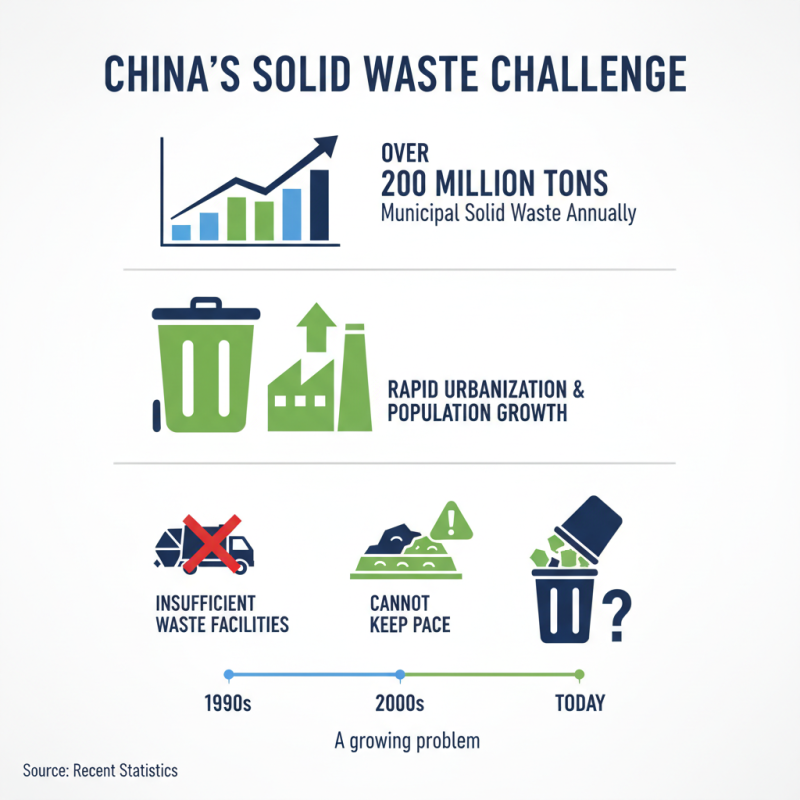
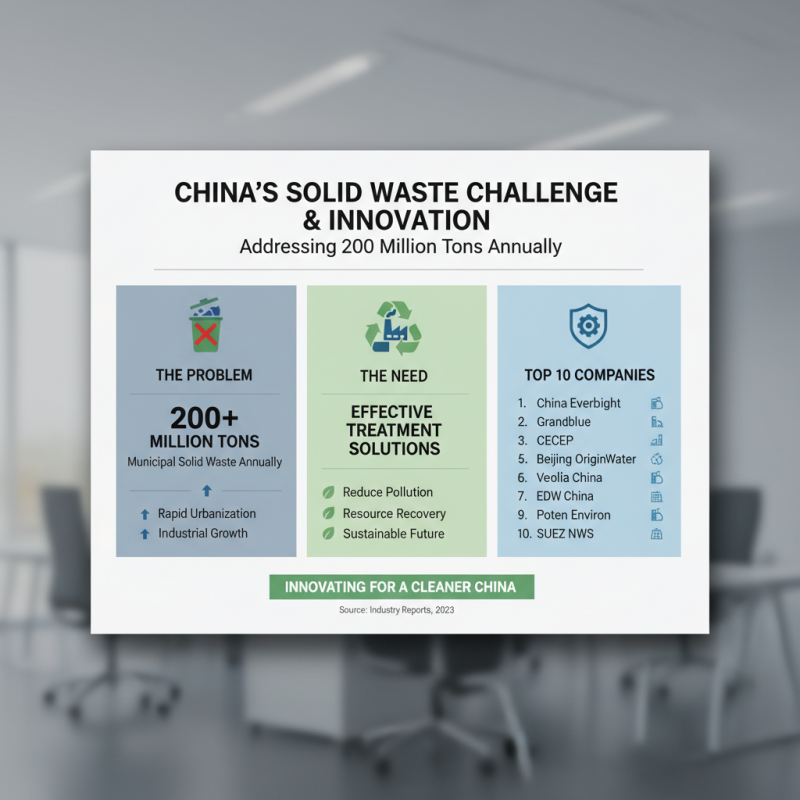
China faces significant challenges in solid waste management. The country generates over 200 million tons of municipal solid waste annually, according to recent statistics. Rapid urbanization and population growth are driving this surge. Inadequate waste management facilities cannot keep pace with the volume.
Recycling rates remain low, around 30%, reflecting inefficiencies in existing systems. Many regions rely heavily on landfilling, which poses environmental risks. A 2021 report indicated that only 10% of waste undergoes proper treatment. The reliance on landfills has raised questions about sustainability and pollution control.
Recent investments in waste-to-energy plants show promise but are still limited. Public awareness is growing, yet cultural attitudes towards waste separation lag. More education is needed to improve recycling efforts. Enhanced cooperation between public and private sectors is crucial for better waste management solutions.
Criteria for Evaluating Waste Treatment Companies
When evaluating solid waste treatment companies in China, several key criteria come into play. Experience is paramount. Companies with a solid track record demonstrate their capability in managing diverse waste streams effectively. Years in the industry often correlate with expertise in both technology and regulation compliance.
Next, look for innovative solutions. A good company should adopt advanced technologies. This includes plasma gasification or waste-to-energy methods. Sustainability plays a crucial role as well. Companies that prioritize eco-friendly practices present themselves as forward-thinking.
Additionally, assess their certifications and partnerships. Credible companies often collaborate with local authorities and environmental agencies. Such affiliations enhance a company’s credibility. Transparency in operations is vital too. It's important to evaluate how openly they share data about waste processing efficiencies. It can reveal their commitment to accountability and improvement.
Finding the right company isn’t straightforward. Some may lack transparency, making it hard to gauge true performance. Others may focus heavily on technology but neglect community impact. Thus, a balanced view is crucial. Consider all aspects before making a decision.
Top 10 Solid Waste Treatment Companies in China
China's rapid urbanization and industrial growth have led to an urgent need for effective solid waste treatment solutions. The country generates over 200 million tons of municipal solid waste annually, according to recent industry reports. This massive volume puts tremendous pressure on waste management systems. Innovative companies are stepping up to address this challenge.
Among the top companies in solid waste treatment, advanced technologies are increasingly utilized. Many firms are adopting waste-to-energy technologies. This approach not only reduces landfill use but also generates electricity. Reports indicate that integrating recycling processes can enhance recovery rates by up to 30%. However, challenges remain, including the need for compliance with stringent environmental regulations.
The effectiveness of these companies can vary significantly. Some implement state-of-the-art facilities, while others may face operational inefficiencies. Reports show that nearly 40% of the facilities struggle with outdated technology. Continuous investment in R&D is essential for long-term sustainability. As global buyers seek reliable partners, understanding these dynamics is critical in identifying the top players in China’s solid waste treatment sector.
Innovative Technologies in Solid Waste Treatment
In recent years, the demand for innovative technologies in solid waste treatment has surged in China. Companies are adopting advanced methods to tackle the growing waste crisis. These technologies aim to enhance efficiency and sustainability in waste management processes.
One notable approach is waste-to-energy conversion. This method not only reduces landfill reliance but also generates renewable energy. Various facilities are now capturing landfill gas to produce electricity. However, balancing economic viability with environmental impact remains a challenge. Some communities are still hesitant about potential emissions from these processes.
Another emerging technology involves the use of artificial intelligence. AI helps optimize sorting and recycling methods, improving recovery rates of recyclable materials. Yet, the integration of AI is not without its hurdles. Data privacy concerns and the need for skilled personnel are ongoing issues that require attention. Overall, these innovative approaches highlight a shift towards a more sustainable future, even as questions about implementation linger.
Top 10 Solid Waste Treatment Companies in China for Global Buyers
| Rank |
Technology Type |
Annual Treatment Capacity (tons) |
Main Market Focus |
Notable Innovations |
| 1 |
Mechanical Biological Treatment |
500,000 |
Municipal Solid Waste |
Advanced Sorting Systems |
| 2 |
Incineration |
1,200,000 |
Industrial Waste |
High-Efficiency Energy Recovery |
| 3 |
Anaerobic Digestion |
300,000 |
Agricultural Waste |
Biogas Production |
| 4 |
Landfill |
2,000,000 |
Construction Waste |
Leachate Treatment |
| 5 |
Composting |
150,000 |
Organic Waste |
Aerobic Process Optimization |
| 6 |
Waste-to-Energy |
800,000 |
Municipal Solid Waste |
Thermal Treatment Technologies |
| 7 |
Pyrolysis |
400,000 |
Plastic Waste |
Oil Production from Plastic |
| 8 |
Physical-Chemical Treatment |
250,000 |
Hazardous Waste |
Heavy Metal Removal |
| 9 |
Gasification |
550,000 |
Municipal & Industrial |
Synthetic Gas Production |
| 10 |
Recycling Technologies |
600,000 |
Metal and Plastic |
Closed-loop Recycling |
Future Trends in China's Waste Management Industry
China's waste management landscape is evolving rapidly. According to a report by the China National Environmental Protection Agency, the country generated over 200 million tons of municipal solid waste in 2022. By 2025, this figure is expected to exceed 300 million tons. The management of this waste presents both challenges and opportunities. Many cities struggle with outdated waste segregation practices. Improving this can lead to increased efficiency and better recycling rates.
Technological advancements are crucial for the future. The rise of AI and IoT in waste management holds significant promise. For instance, smart bins equipped with sensors can monitor waste levels and optimize collection routes. A report from Statista predicts that the market for smart waste management solutions will grow at a rate of about 15% annually through 2028. However, investment and infrastructure are still lacking in many regions.
Public awareness is another important factor. Educational programs around waste separation and recycling need enhancement. Many citizens remain unaware of proper waste disposal methods. This gap in knowledge can hinder effective waste management initiatives. In addressing these challenges, China's waste management industry can become more robust. The focus on innovation and education is essential for achieving sustainable practices in this ever-growing sector.
Top 10 Solid Waste Treatment Companies in China: Projected Market Share