




Leave Your Message
Choosing among China’s top sludge treatment equipment suppliers requires more than comparing catalog prices. Sludge Treatment performance depends on the material, the process, and the plant’s operating conditions. A belt press may suit one facility, while a centrifuge or screw press may better fit another. The difference shows up in practical details: cake dryness, polymer use, wash-water demand, noise, and the space needed for maintenance.
Wastewater engineering authority George Tchobanoglous has shaped the field through his technical books and research. A practical paraphrase of his engineering perspective is: “Treat sludge management as part of the whole treatment process, not as an afterthought.” This is a paraphrase, not a verified direct quotation. It captures a useful point for supplier evaluation: equipment should be judged by how it performs within the full process, not by a single brochure specification.
A credible supplier should provide clear test data, material specifications, commissioning support, and references from comparable installations. Ask how the machine handles changing feed solids, and request operating figures under conditions close to your own. Look closely at wear parts and service response times. Small details matter. A polished demonstration may not reflect months of daily operation. And supplier claims still need independent checking. This outline will compare leading Chinese suppliers by equipment range, technical support, customization, and evidence of field performance. No single ranking fits every plant. That limitation deserves attention.
What Sludge Treatment Equipment Does and How It Works
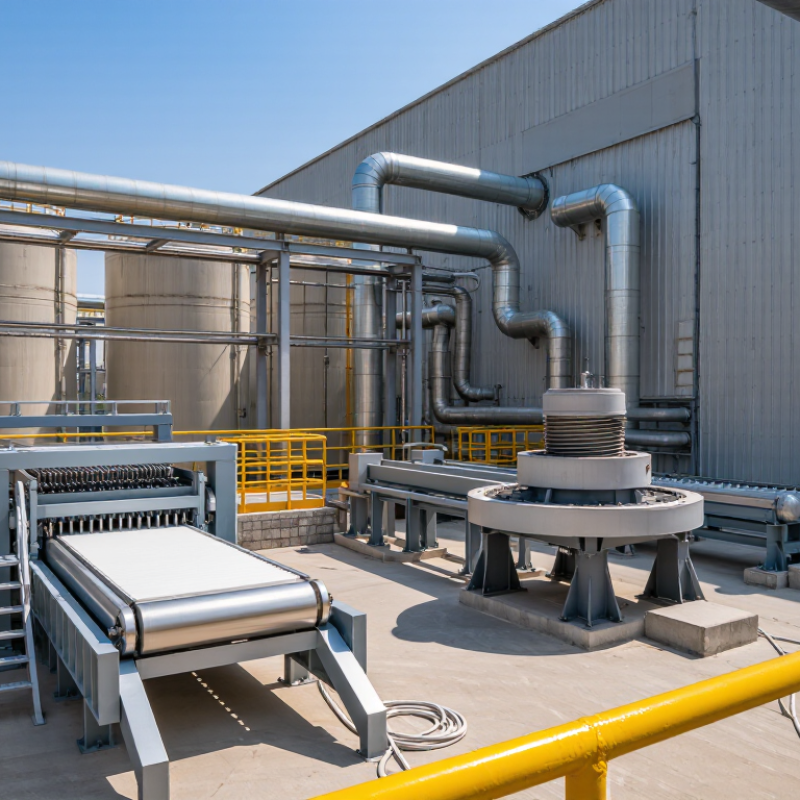
Sludge treatment equipment reduces water content and makes residual solids easier to handle. A typical line may include screens, a thickener, conditioning tanks, and a dewatering machine. The exact setup depends on sludge type, flow rate, and the required solids level. One layout does not fit every plant.
Screens remove larger debris before it can damage pumps or clog pipes. In a thickener, gravity allows solids to settle while clearer water flows away. Operators may add a conditioning agent to help fine particles gather into larger flocs. Then a belt press or centrifuge separates more water. A belt press squeezes sludge between moving porous belts; a centrifuge uses rotation to push heavier solids outward. The cake may look firm, but it is not necessarily dry.
Small details matter. A poorly adjusted polymer feed can leave cloudy water or sticky cake. Regular checks of belt tension, bearings, and filtrate clarity can reveal trouble early. Simple, but easy to overlook. Some sites add thermal drying when lower moisture is needed, though it uses more energy and requires careful process control. Equipment selection should follow representative sludge testing, not brochure figures alone. Results can vary with season and upstream operations. That uncertainty is real.
| Equipment or Supplier Capability | Main Purpose | How It Works | Typical Result or Role | Key Selection Considerations |
|---|---|---|---|---|
| Sludge thickener | Increase solids concentration before downstream treatment. | Settling, gravity, flotation, or mechanical separation removes part of the water from dilute sludge. | Reduces the volume of sludge that must be pumped, conditioned, or dewatered. | Sludge characteristics, required throughput, available space, and whether chemical conditioning is needed. |
| Polymer preparation and dosing system | Condition sludge to improve solid–liquid separation. | Prepares and meters polymer solution, which helps fine particles form larger flocs that are easier to separate. | Can support more stable thickening or dewatering; dosage depends on sludge and operating conditions. | Polymer type, mixing quality, dosing control, maintenance access, and compatibility with the selected dewatering unit. |
| Belt filter press | Continuously dewater conditioned sludge. | Sludge passes between moving porous belts. Drainage, gravity, and increasing mechanical pressure separate water from solids. | Produces dewatered sludge cake and filtrate in a continuous process. | Feed consistency, belt washing-water needs, operator attention, cake handling, and site requirements. |
| Screw press | Continuously thicken and dewater sludge. | A rotating screw moves sludge through a screen and applies gradually increasing pressure as separated water drains away. | Produces sludge cake and separated liquid; commonly considered where steady, automated operation is desired. | Sludge type, throughput, screen cleaning, polymer requirements, and the dryness needed for the next process. |
| Decanter centrifuge | Separate suspended solids from liquid using centrifugal force. | A rapidly rotating bowl separates solids from liquid; a scroll conveys the settled solids toward the discharge. | Provides continuous separation in a compact process area, with performance dependent on feed and operating settings. | Energy use, wear protection, noise control, maintenance capability, feed properties, and required separation performance. |
| Plate-and-frame filter press | Batch dewater sludge under pressure. | Sludge is pumped into filter chambers. Filter cloth retains solids while filtrate passes through; the press opens to discharge cake. | Produces filter cake and filtrate in cycles; suitable where batch operation is acceptable. | Cycle time, labor or automation level, cloth maintenance, feed-pump requirements, and cake-discharge arrangements. |
| Sludge dryer | Reduce moisture in already dewatered sludge. | Heat transfers to the sludge and evaporates water; systems may use direct or indirect heat transfer. | Reduces the mass and volume of sludge for storage, transport, or a permitted downstream use or disposal route. | Heat source, energy demand, exhaust and odor control, fire-safety provisions, and applicable regulations. |
| Anaerobic digestion system | Biologically stabilize suitable organic sludge. | Microorganisms break down biodegradable organic matter in an oxygen-free reactor; biogas is generated and collected. | Can reduce the biodegradable fraction and produce biogas; it is a biological treatment process, not a dewatering machine. | Feed characteristics, temperature control, retention time, gas handling, process monitoring, and residuals management. |
| Integrated process and controls | Coordinate equipment from sludge feed through cake discharge. | Pumps, conveyors, sensors, control panels, and interlocks connect process stages and help operators monitor operation. | Supports consistent operation and safer coordination of individual treatment units. | Control-system scope, alarms, local service support, spare-parts availability, operator training, and integration with existing plant systems. |
| Supplier evaluation and testing | Verify that proposed equipment is suitable for the actual sludge and site. | Review process design, request references and documentation, and use representative sludge testing or a pilot trial where appropriate. | Helps compare proposals on process fit rather than equipment descriptions alone. | Clearly defined feed conditions, guaranteed performance basis, utilities, installation scope, commissioning, warranty, and after-sales service. |
Note: Actual cake dryness, throughput, polymer consumption, energy use, and operating cost depend on sludge composition, conditioning, equipment design, and operating conditions. Confirm performance using representative feed data and a clearly defined test or guarantee basis.