How to Optimize Sludge Incineration for Better Efficiency?
Sludge Incineration plays a vital role in waste management. It reduces the volume of sludge significantly. However, optimizing this process remains a challenge. Effective incineration techniques can lead to better energy recovery and lower emissions.
Many facilities still face inefficiencies in their sludge incineration methods. Factors like temperature, moisture content, and burner design can deeply affect performance. It's crucial to evaluate these elements. Minor adjustments can yield substantial improvements. Monitoring combustion conditions is equally important to enhance overall system efficiency.
The optimization of sludge incineration should also consider environmental impacts. Balancing efficiency with sustainability can be complex. Operators must reflect on their practices. Innovations and technologies can support better outcomes, yet their implementation requires critical analysis. Engaging in continuous improvement will lead to more effective sludge incineration strategies.
Understanding Sludge Characteristics and Their Impact on Incineration
When it comes to sludge incineration, understanding sludge characteristics is crucial. Sludge composition can vary greatly based on its source. For instance, municipal sewage sludge typically contains around 75% water, while industrial sludge might have higher organic content. The presence of heavy metals and other contaminants can also impact incineration efficiency. These factors must be meticulously analyzed for optimal combustion.
**Tip:** Regular testing of sludge samples can help predict incineration outcomes. This practice aids in adjusting operational parameters to enhance efficiency.
Adjusting incineration conditions based on sludge types is vital. High ash content can lead to lower combustion temperatures, affecting efficiency. Researchers indicate that optimizing air supply can improve the burnout rate of organic matter. Therefore, understanding these characteristics enables operators to achieve better thermal efficiency.
**Tip:** Incorporating advanced monitoring systems can provide real-time data on combustion processes. This helps identify issues before they escalate, leading to more effective operations.
How to Optimize Sludge Incineration for Better Efficiency? - Understanding Sludge Characteristics and Their Impact on Incineration
| Sludge Type |
Moisture Content (%) |
Calorific Value (kcal/kg) |
Ash Content (%) |
Optimal Temperature (°C) |
Emission Factor (g CO2/kg) |
| Municipal Wastewater Sludge |
80 |
3,000 |
25 |
850 |
1,200 |
| Industrial Sludge (Textile) |
75 |
2,500 |
30 |
900 |
1,500 |
| Animal Waste Sludge |
70 |
3,200 |
20 |
800 |
1,100 |
| Biosolids |
78 |
3,100 |
22 |
830 |
1,250 |
| Dairy Processing Sludge |
72 |
2,800 |
28 |
870 |
1,300 |
Analyzing Energy Recovery Potential from Sludge Incineration Processes
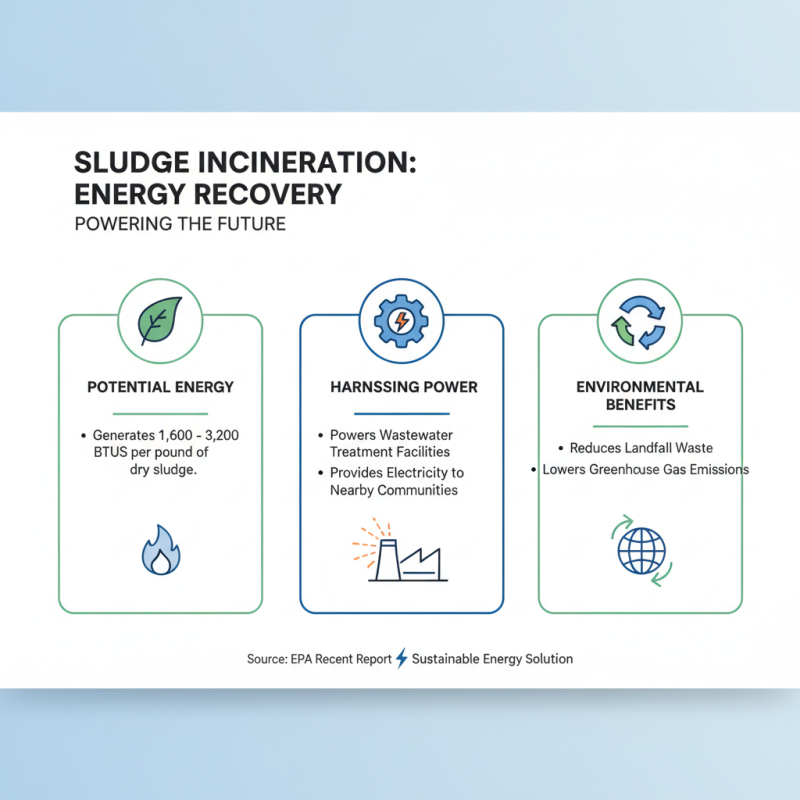
Sludge incineration has the potential to recover significant amounts of energy. According to a recent report from the Environmental Protection Agency, sludge incineration can generate 1,600 to 3,200 BTUs of energy per pound of dry sludge. This energy can be harnessed to power facilities or possibly provide electricity to nearby communities.
However, optimizing the incineration process to maximize energy recovery is crucial. One approach involves improving the combustion efficiency of incinerators. Many facilities see energy losses due to incomplete combustion or heat not being fully utilized. More advanced technologies, such as moving grate systems, can enhance combustion performance. They allow for better air distribution and faster drying of the sludge.
Moreover, the energy recovery process remains underutilized. Many plants only recover a fraction of the energy produced. Research indicates that up to 40% of potential energy can be lost if not captured effectively. Integrating combined heat and power (CHP) systems could address this issue, allowing for the conversion of waste heat into additional energy. More focus on these technologies is essential for more sustainable operations.
Implementing Advanced Technologies for Enhanced Combustion Efficiency
Advancements in sludge incineration technology have proven essential for enhancing combustion efficiency. Utilizing advanced combustion techniques can significantly optimize energy recovery from waste. A recent report indicates that upgrading to modern incinerators can improve energy recovery rates by up to 30%. This is crucial in meeting sustainability goals.
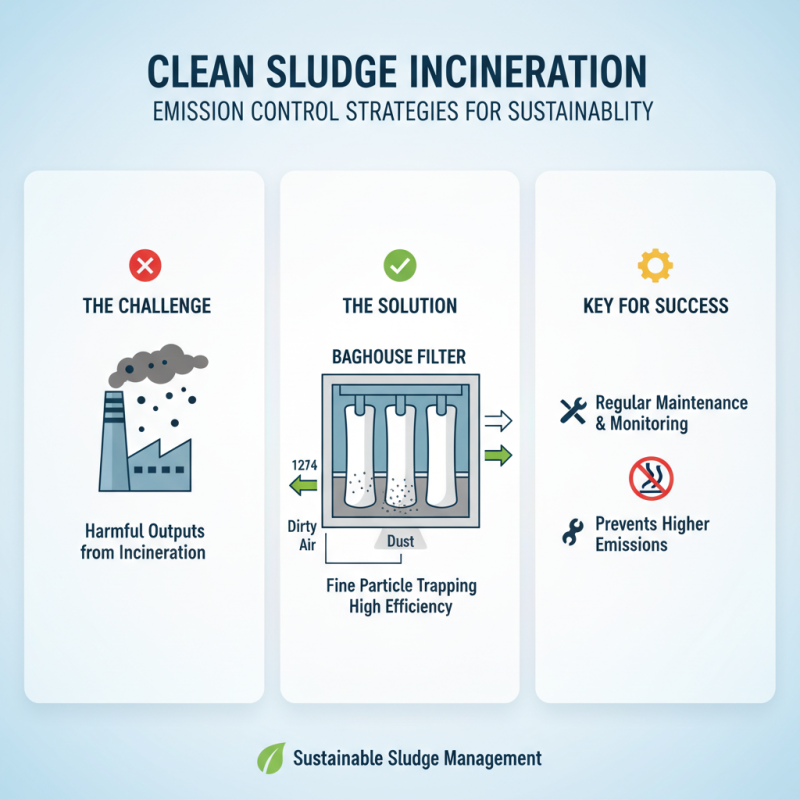
Implementing automated combustion controls is another valuable strategy. These systems can adjust the oxygen and fuel levels in real-time. This optimization helps achieve complete combustion, leading to reduced emissions. A study showed that enhanced controls could cut carbon emissions by nearly 20%, making operations more eco-friendly. However, continuous monitoring is required to avoid inefficiencies.
Despite these positive advancements, challenges remain. Some facilities still rely on outdated equipment, resulting in inconsistent performance. Moreover, initial investment costs for new technologies can be a barrier. Regular assessments and workforce training are often overlooked but are necessary for smooth operations. Enhanced training programs could bridge the gap and ensure techniques are used effectively.
Assessing the Role of Temperature and Residence Time in Sludge Treatment
The effectiveness of sludge incineration is heavily influenced by temperature and residence time. Studies show that optimal temperatures range from 800°C to 1000°C. At these temperatures, organic materials burn efficiently, reducing ash generation. However, maintaining such high temperatures may require more energy. This can increase operational costs. Balancing energy input with desired output is critical.
Residence time also plays a vital role. Generally, longer residence times enhance the reduction of pollutants. A typical duration of 30 to 60 minutes allows for better combustion. However, exceeding this can lead to excess ash. This not only complicates disposal but can also lead to higher emissions. Recent reports suggest that a targeted approach, aligning temperature and residence time, leads to a more efficient process.
While data supports these findings, different sludge types require variations in treatment plans. For instance, biosolids and industrial sludge might behave differently under similar conditions. This adds complexity to optimizing incineration processes. The industry must continually assess efficiency, focusing on real-world applications rather than theoretical models. Being reflective on these parameters is essential for true advancement.