What Are the Key Discharge Standards You Need to Know?
In the realm of environmental compliance, understanding "Discharge Standards" is crucial. According to a 2021 report by the Environmental Protection Agency (EPA), nearly 60% of water bodies are affected by pollutants. This highlights the importance of adhering to stringent discharge regulations. Industries must be well-versed in these standards to mitigate environmental impact and avoid hefty penalties.
Discharge standards set limits on pollutants released into water systems. For instance, the Clean Water Act enforces specific limits tailored to various industries. Companies that breach these standards face fines and reputational damage. Moreover, compliance isn’t just about avoiding consequences; it is vital for public health and ecological integrity.
However, many companies struggle with understanding and implementing these standards effectively. This often leads to unintentional violations. Industry leaders emphasize the need for ongoing education and transparency in discharge practices. Addressing these challenges is essential for building a sustainable future. Understanding discharge standards is not merely a regulatory requirement; it is a moral and ethical responsibility we all share.

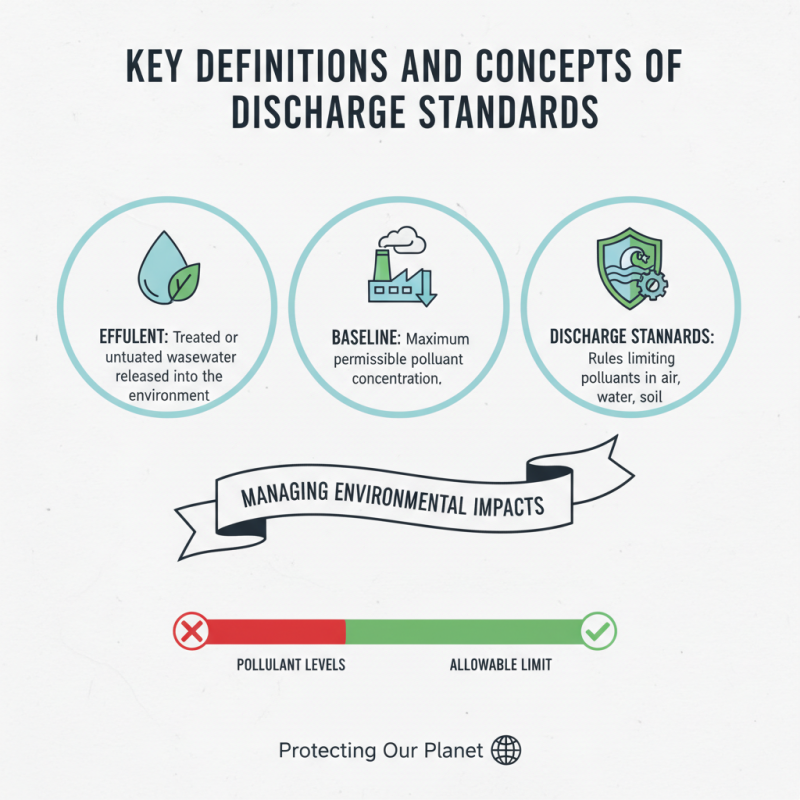
Key Definitions and Concepts of Discharge Standards
Discharge standards are critical in managing environmental impacts. Key definitions help clarify what these standards entail. They govern the permissible levels of pollutants released into air, water, or soil. Common terms include "effluent", which refers to wastewater discharged, and "baseline," representing the maximum allowable pollutant concentration.
Understanding metrics is essential in compliance. For instance, Biological Oxygen Demand (BOD) reflects organic pollutant levels in water. High BOD indicates poor water quality. Conversely, "Total Suspended Solids" (TSS) measures particle concentrations in water. TSS can affect aquatic life significantly.
Each discharge standard has its nuances. They may vary by locality and industry. Yet some organizations struggle to adhere to these varying regulations. A lack of clear communication often leads to confusing practices. Keeping abreast of local standards is not just beneficial but necessary for sustainable operations. Clarity in definitions promotes better compliance and environmental stewardship.
Importance of Discharge Standards in Environmental Protection
Discharge standards are critical for protecting our environment. They govern how much pollutants can be released into air and water. According to the U.S. Environmental Protection Agency, industries discharge approximately 3.9 billion pounds of toxic chemicals annually. This massive quantity underlines the importance of stringent regulations.
Effective discharge standards help minimize the impact on ecosystems. For example, untreated wastewater can introduce pathogens into rivers. This poses health risks to communities relying on these water sources. Studies indicate that up to 60% of fish populations in polluted areas suffer from reduced reproductive success due to toxic pollutants. These figures underscore the necessity for continuous monitoring and enforcement of discharge limits.
While regulations exist, compliance remains a challenge. A report from the World Health Organization noted that 80% of wastewater globally is discharged without treatment. This adds to the urgency for updated standards. Improved discharge rules can lead to cleaner air and water, protecting biodiversity and public health. However, gaps in enforcement and oversight mean there is much work ahead.
What Are the Key Discharge Standards You Need to Know?
| Parameter |
Maximum Allowable Limit |
Measurement Unit |
Impact on Environment |
| Biochemical Oxygen Demand (BOD) |
30 |
mg/L |
Depletes oxygen in water, harming aquatic life |
| Chemical Oxygen Demand (COD) |
250 |
mg/L |
Indicates organic matter pollution |
| Total Suspended Solids (TSS) |
50 |
mg/L |
Can smother aquatic habitats, block sunlight |
| pH |
6.5 - 9.0 |
N/A |
Affects aquatic life, especially fish |
| Nitrate (NO3) |
10 |
mg/L |
Causes eutrophication, harming water quality |
Major Types of Discharge Standards Used Globally
Discharge standards play a crucial role in protecting the environment. Different regions use various standards based on ecological and health considerations. Key types include limits on pollutants like nitrogen, phosphorus, and heavy metals. These elements significantly affect water quality and aquatic life.
In Europe, the Urban Waste Water Treatment Directive regulates sewage management. It requires a maximum of 10 mg/l for total phosphorus. In the U.S., the Environmental Protection Agency sets limits for a range of contaminants. For example, the National Pollutant Discharge Elimination System allows only a specific concentration of solid waste in effluents.
Tips: Regularly review local discharge standards. Compliance helps avoid legal penalties. Technology advancements offer solutions to meet these challenging standards.
Often, industries struggle to balance production and compliance. This can lead to significant fines. A recent report identified a 30% increase in violations over the past five years. Awareness and training are critical to address these challenges. Investing in better practices is essential for sustainable growth.
Common Parameters Measured in Discharge Standards
Discharge standards are essential for protecting water quality. Various parameters are measured to ensure compliance. These include pH levels, suspended solids, biochemical oxygen demand (BOD), and chemical oxygen demand (COD). According to the Environmental Protection Agency (EPA), typical pH standards range from 6.5 to 8.5. Deviating from this range can harm aquatic life.
Suspended solids can interfere with photosynthesis in water bodies. The EPA recommends limits often set between 30 to 100 mg/L. When levels exceed these limits, the ecosystem suffers. BOD and COD offer insights into organic pollution levels. Reports indicate that BOD standards are usually around 20 mg/L for treated wastewater. Excessive BOD can lead to oxygen depletion, affecting fish populations.
Monitoring these parameters is crucial, but challenges remain. Some facilities struggle to maintain consistent compliance. Equipment malfunctions or analytical errors can skew data. Continual education and investment in technology are vital. Authorities need to enforce standards adequately, but many facilities lag in adaptation. This raises questions on how we can improve discharge practices and protect our water resources effectively.
Compliance and Enforcement Mechanisms for Discharge Standards
Compliance with discharge standards is crucial for protecting environmental health. These standards regulate how industries release effluents into water bodies. According to the Environmental Protection Agency (EPA), over 40% of U.S. rivers and lakes do not meet water quality standards. This figure illustrates the pressing need for stringent enforcement of discharge regulations.
Enforcement mechanisms play a vital role in maintaining compliance. Agencies often use inspections, sampling, and monitoring to ensure adherence. In 2022, approximately 15,000 inspections were conducted by the EPA, revealing that nearly 60% of facilities inspected were found to be non-compliant at some point. Non-compliance can result in fines and, in extreme cases, shutdown of facilities. However, many industries lack the necessary resources to implement changes quickly. This highlights a gap in enforcement actions versus available support for improvement.
Public awareness is another factor. Without community engagement, compliance rates can suffer. Increased advocacy has led to improved transparency regarding discharge practices. Reports indicate that as public scrutiny rises, compliance rates can improve. However, relying solely on community action may not be enough. Continuous refinement of enforcement mechanisms is essential to ensure that businesses prioritize environmental integrity alongside operational efficiency.
Discharge Standards Compliance Overview
This bar chart illustrates the compliance levels of different types of discharge standards including biological oxygen demand (BOD), total suspended solids (TSS), and ammonia nitrogen (NH3-N) across various industries. These metrics are crucial for assessing environmental impacts and regulatory compliance.